Powering Global Access: Monad’s Onramp Ecosystem

Harry Alford
@HarryAlford3 (opens in new tab)- Published on
- · 4 min read
Money moves on Monad.
But payments don’t start onchain. They start with local fiat, local banks, local cards, and local constraints. If users can’t convert fiat to stablecoins easily, everything downstream, like wallets, apps, and protocols, simply doesn’t matter.
That’s why onramps are not an edge integration on Monad. They are core payments infrastructure.
Onramps are the bridge between the world people live in and the onchain systems developers are building. They determine who can access your app, from which countries, using which payment methods, and with how much friction. For a high‑performance chain designed around stablecoin flows and payments, access is as important as execution.
Today, Monad supports a growing, global onramp ecosystem spanning cards, bank transfers, local payment methods, mobile‑first rails, and embedded APIs. This post explains why that matters, how builders should think about choosing the right ramp, and which providers live on Monad today.
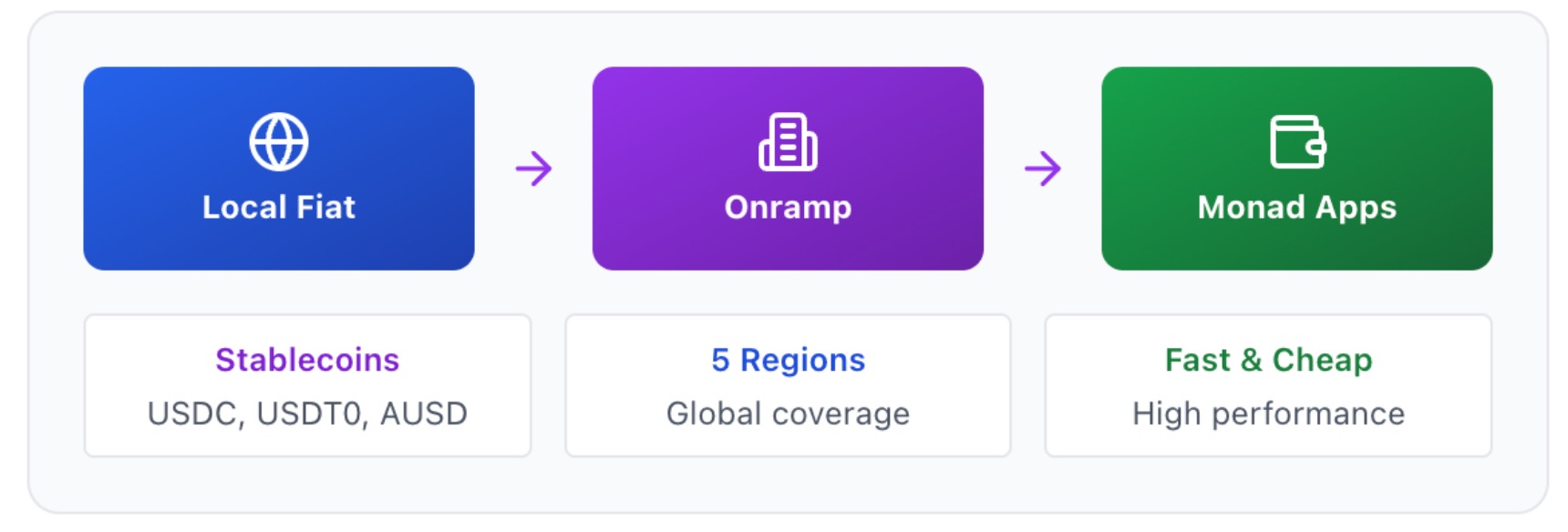
Why Onramps Are Core Infrastructure
Onramps determine who can access an ecosystem, from where, using which payment methods, and with what level of friction. For Monad, a broad, global onramp layer is foundational.
A strong onramp enables:
- Global reach: Access across LATAM, Africa, APAC, Europe, and North America
- Local payment methods: PIX in Brazil, SPEI in Mexico, UPI‑like rails in India, mobile money in Africa, and regional bank transfers
- Stablecoin‑native flows: Direct conversion from fiat into USDC, USDT0, AUSD, USD1, and other stablecoins, without needless hops
- App‑level abstraction: Developers can embed ramps directly into wallets, neobanks, games, and payment apps, rather than sending users off‑platform
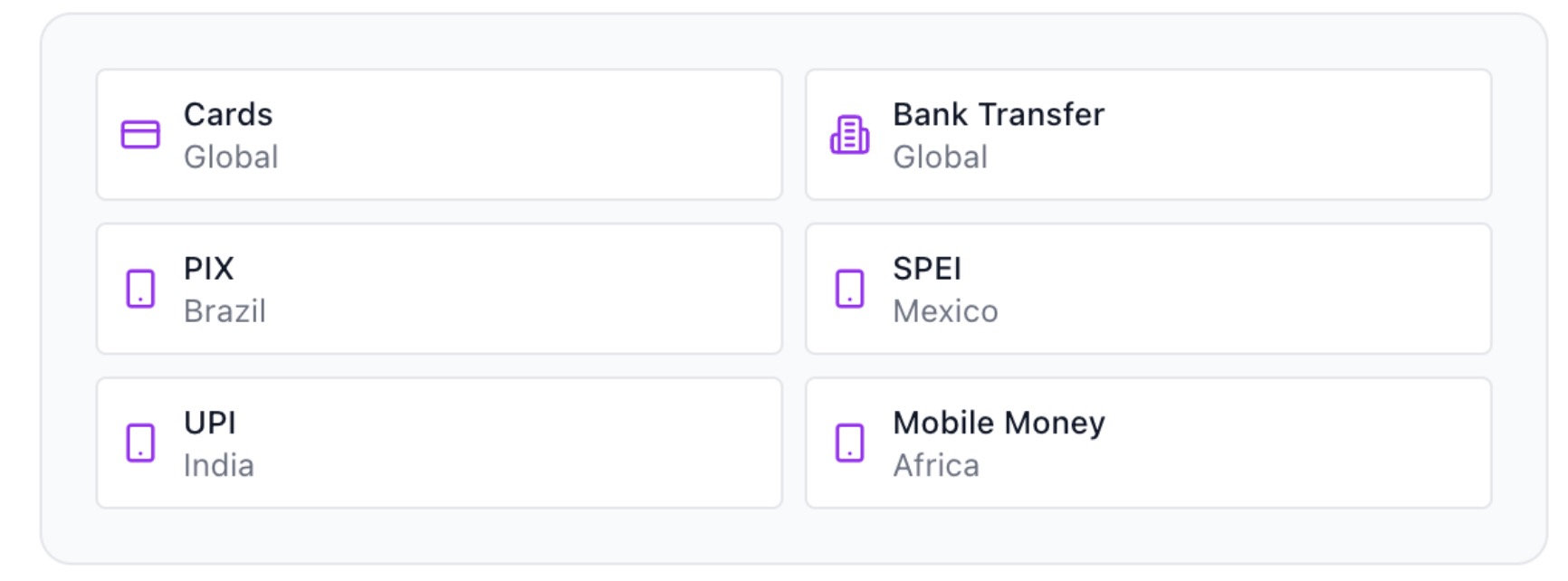
If apps want onchain payments to feel as frictionless as Web2, access must be local, fast, and ubiquitous.
Onramp Categories
Rather than relying on a single provider, Monad supports a diverse onramp ecosystem. Different providers excel in different regions, payment methods, and compliance regimes. This gives builders the flexibility to choose the right tool for their users or combine multiple ramps for redundancy and coverage.
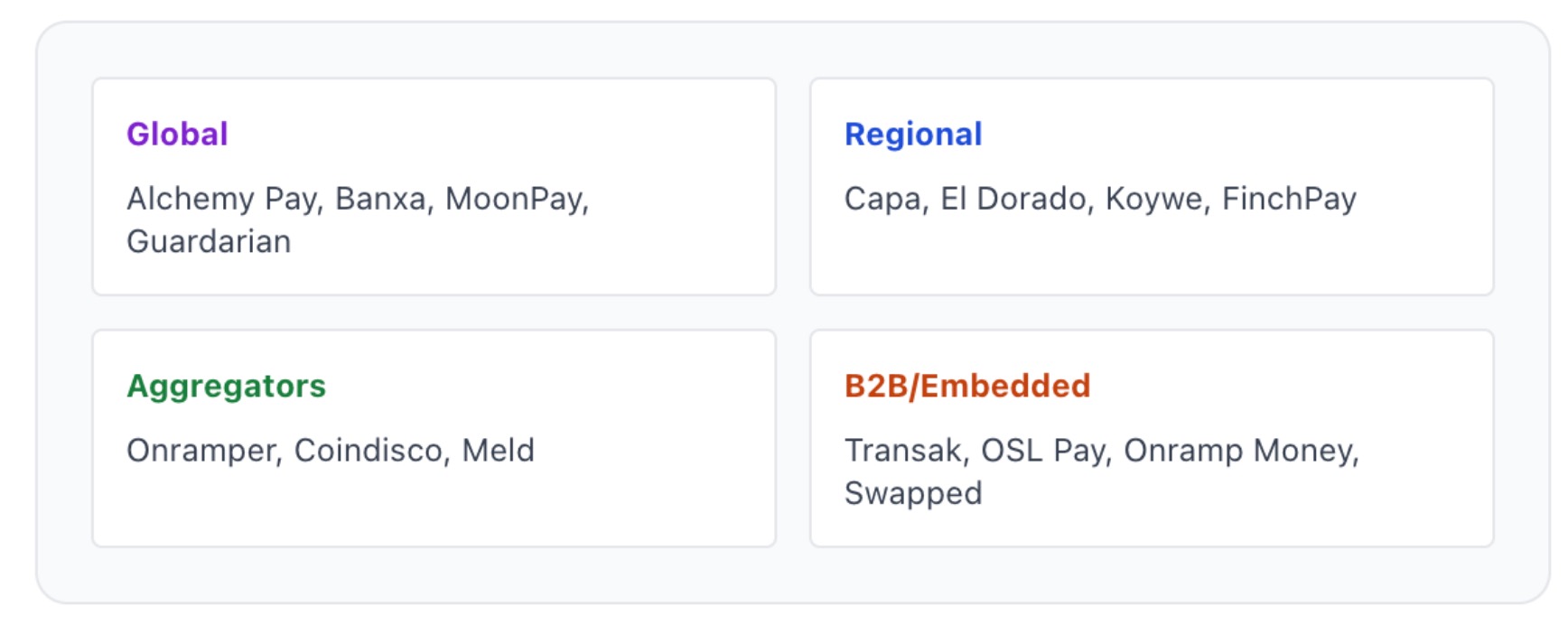
Broadly, but not limited to, onramps fall into a few categories:
- Global consumer onramps (cards, bank transfers, Apple Pay / Google Pay)
- Regional specialists (LATAM‑focused, EU‑focused, APAC‑focused providers)
- Aggregators (single integrations that route across multiple ramps)
- B2B / embedded infrastructure (APIs for fintechs, neobanks, and payment apps)
Onramps Live in the Monad Ecosystem
Below is a snapshot of onramp providers currently supported on Monad.
Choosing the Right Onramp
There’s no single “best” onramp, only the best fit for your users.
When building on Monad, developers should consider some of the following:
- Where are your users? (Country and region coverage matters more than brand recognition.)
- Which payment methods matter most? (Cards vs bank transfers vs mobile money)
- Consumer vs embedded flows (Widgets vs API‑level integrations.)
- Compliance and licensing requirements for your target markets.
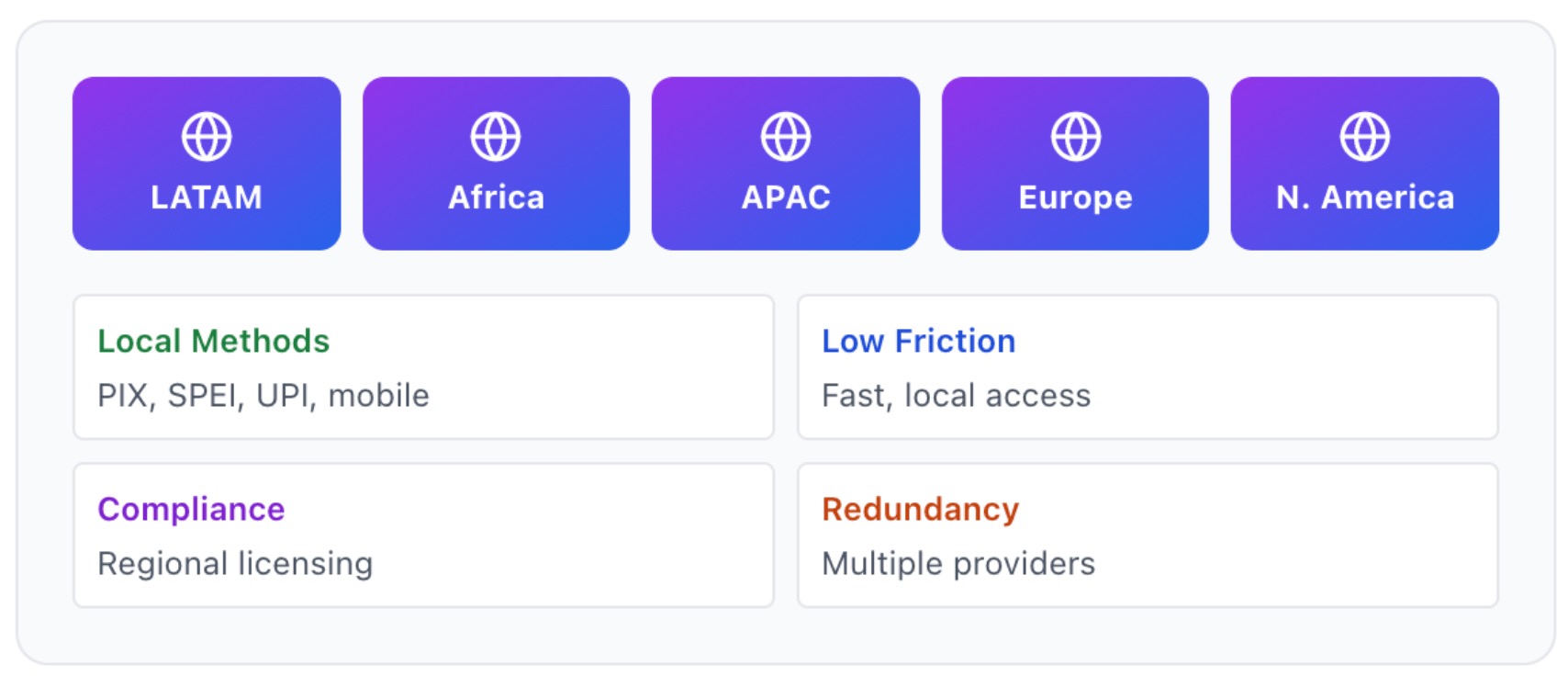
Many apps choose to support multiple onramps to broaden coverage, improve reliability, and increase conversion.
The Bigger Picture
Monad is built for payments at scale: high throughput, low fees, and fast finality. But performance alone doesn’t onboard users. Access does.
By supporting a broad, global onramp ecosystem, Monad enables developers to build apps that feel local everywhere while settling on a single, high‑performance chain.
As new regions, payment methods, and stablecoin use cases emerge, onramps will continue to expand in lockstep with real‑world adoption.
To get started with integrating an onramp on Monad, visit the documentation to explore the live providers.